
For many clients a package database application is the ideal solution, incorporating a set of fields and templates to reflect what are commonly accepted types of information. A prime example is that of bibliographic data (an organised collection of references to published reports, articles, books or similar). There may be a need for some flexibility in the field labelling, the addition or removal of a field from a template, but in the main the database structure is easily defined and fairly straightforward.
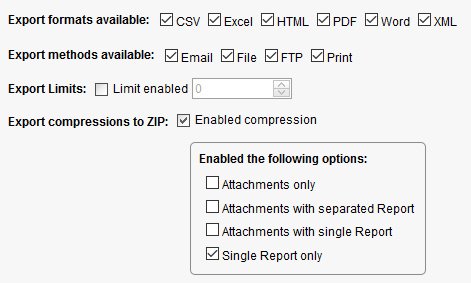
Most systems should provide this level of flexibility and certainly within Soutron, the ability to configure fields and templates is a strong and purposeful aspect of the database design. Further, all fields and templates are multi-lingual (they can be presented in any language by the choice of the user) and they are controlled through simple menus and forms without the need for technical staff to make changes.
The need for a considered database design and system architecture arises when data relationships are needed that are more complex or unique and the data is not simply bibliographic. The need to control and manage metadata in this circumstance takes priority over work flows and is likely to be more knowledge focused. It is best exemplified by projects where the demand for information is from a professional practice group or is in relation to evidence or research that needs to be related in some way with other data elements.
Such is the nature of this type of requirement. In order to present data simply to an end user, it is necessary for the complexity of how the data is conjoined to remain hidden from the end user. This requires database designs that are based on analytical and conceptualising skills which are applied to solve structural data problems. Soutron’s application is a good example of a database that has the attributes to meet the needs of a standard application (in this case Library and Archive management), yet has the facilities to accommodate complex and relational data structures that can be conceived to address the needs of a particular set of data and user community.
A third aspect in respect of database design is to consider indexing, searching and the presentation of data once results are found. A critical part of determining a database model is how data is organised and the relationships and hierarchies that are applied.
The use of prototyping and the use of search template designs makes this easy to do and quickly allows a team to gain confidence to design a new application to test with users.

Where specialist indexing is required, we can provide consulting services to examine these needs. Should they be the creation of a particular taxonomy or the development of additional specialist index or search options to complement the data being loaded into the database. This for example might be needed for full text documents or a classification scheme for a specialist set of images.
Soutron’s Knowledge Core is designed to address the needs of clients who wish to unify content in a single database instance and to have that content structured and controlled without the need for technical staff to manage it. Soutron’s database design skills can be employed within a project, to analyse existing data and migrate it into a new more informative system display. We can also provide training and assistance in demonstrating how to approach performing in-house analysis of meta-data so that information structures can be designed without the need for IT support.
Soutron is continually refining and adding capabilities to the Knowledge Core database to expand the options and facilities available to clients who wish to have a better performing database to manage and make accessible meta-data. Meta-data without the limitations of conventional library system databases that are MARC or bibliographic based.
Contact Soutron today and tell us more about your existing database and future requirements.
[author] [author_image timthumb='on']https://soutron.nxtlevelcode.com/wp-content/uploads/2015/08/author-graham-beastall.jpg[/author_image] [author_info]Graham Beastall – Senior Consultant and Managing Director. Graham’s background is in Accountancy, Public Administration and Organisational Theory with a deep technical understanding of databases and web technologies. More posts by Graham.[/author_info] [/author]
Enter your name and email below to get our latest articles delivered straight to your Inbox.
Note: We respect your privacy at all times. You may unsubscribe at any time.